
If you own a vacation rental or second home on Cape San Blas, at Indian Pass, in Port St. Joe, at WindMark Beach, or around Mexico Beach, the wind (hurricane) portion of your insurance premium deserves attention. A wind mitigation inspection is a short visit that documents how well your home is built to resist high wind, on a form insurers actually use.
At Renting the Coast, we schedule plenty of vendor visits around guest stays, and wind mitigation inspections come up often after a new roof or at renewal. This guide covers what the inspector looks at, how it differs from a 4-point inspection, and how to fit one in without bumping a booking. For questions about your policy and credits, we point owners to our local insurance partner, Insuring the Coast, the independent agency on Reid Avenue in Port St. Joe.
In this guide
- What a Wind Mitigation Inspection Is (and Why Rental Owners Should Care)
- What the Inspector Documents on the OIR-B1-1802
- Who Can Perform It and How Long It's Good For
- How Credits May Affect the Wind Portion of Your Premium
- Wind Mitigation vs. 4-Point Inspection
- Scheduling an Inspection Around Guest Bookings
- Wind Mitigation Prep Checklist for Rental Owners
- Frequently Asked Questions
What a Wind Mitigation Inspection Is (and Why Rental Owners Should Care)
Florida law requires residential property insurers to offer discounts, credits, or other rate differences for construction features that reduce windstorm damage. The Uniform Mitigation Verification Inspection Form, OIR-B1-1802, is the state form used to document those features. Inspections on or after April 1, 2026, use the updated version (Rev. 04/26), which requires photo or document support for each feature claimed.
For rental owners, the point is simple: carriers can only credit what's documented. For how the wind portion fits into the bigger picture, see Insuring the Coast's guide to wind coverage and hurricane deductibles in Florida.
What the Inspector Documents on the OIR-B1-1802
The form covers seven main areas. Knowing them makes your report much easier to read.
Building code year
The inspector notes which Florida Building Code applied when the home was permitted. Homes permitted under the 2001 code or later are generally treated more favorably.
Roof covering
This records the roof covering type and whether it meets the Florida Building Code, usually shown by a permit date or product approval.
Roof deck attachment
This is how the plywood or OSB sheathing is fastened to the trusses: nail size and spacing. It's usually checked from the attic.
Roof-to-wall attachment
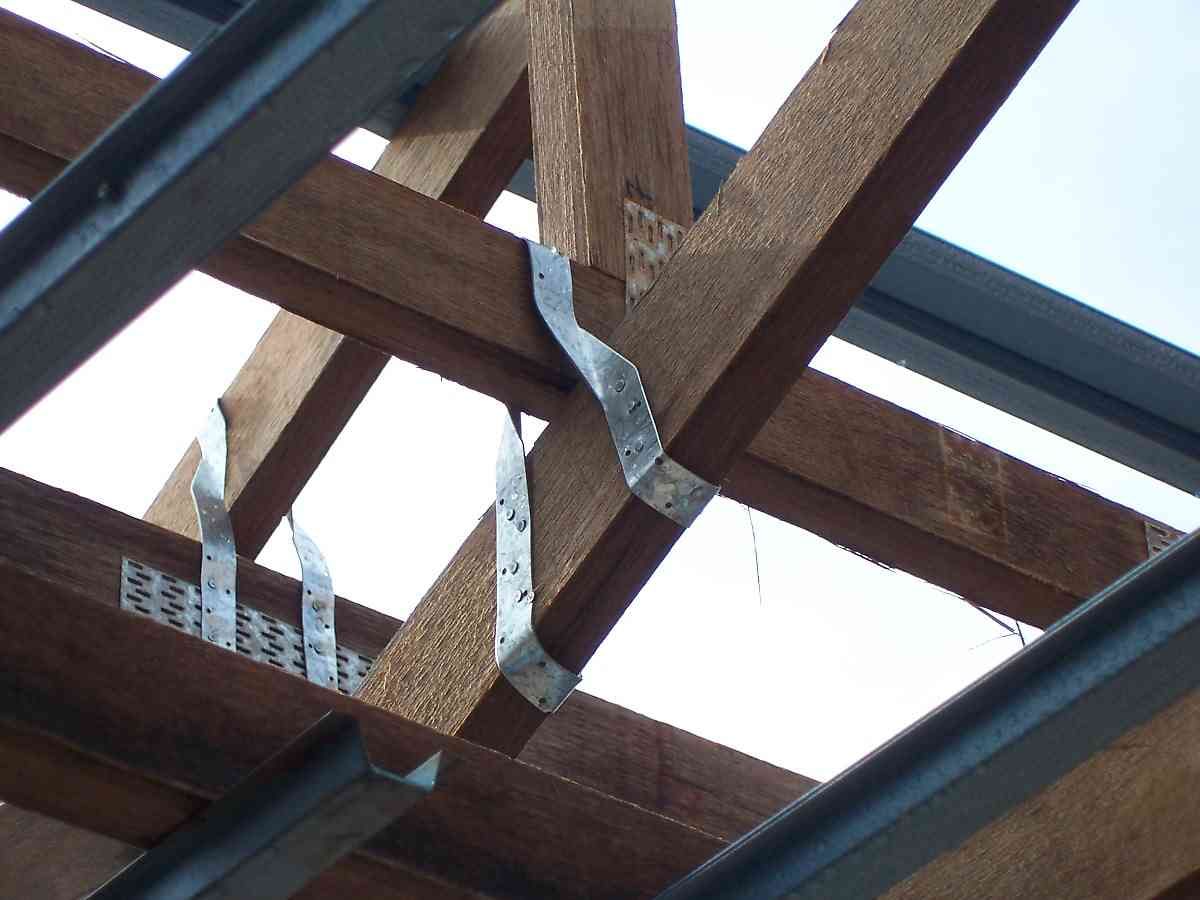
This is how the roof is tied to the walls. Common categories, from weakest to strongest, are toe nails, clips, single wraps, and double wraps. Many older coastal homes have toe nails or clips.
Roof geometry

A hip roof slopes down on all four sides and generally performs better in high wind than a gable roof with flat, triangular ends.
Secondary water resistance (SWR)
SWR is a sealed layer under the roof covering, such as self-adhered tape over the deck seams or a full peel-and-stick underlayment, that helps keep rain out if shingles or panels blow off. It's usually added during a reroof, so ask your roofer about it and keep the paperwork. Insuring the Coast also explains how roof claims are paid under replacement cost vs. actual cash value, which is worth reading alongside your roof's age and condition.
Opening protection
This covers windows, doors, skylights, and garage doors. The top category generally requires every glazed opening to be protected with impact-rated products or approved shutters. One unprotected opening can drop the whole home to a lower category.
Who Can Perform It and How Long It's Good For
Florida law (Fla. Stat. 627.711) lists who can sign the form, including licensed home inspectors who have completed hurricane mitigation training, building code inspectors, licensed general, building, or residential contractors, professional engineers, architects, and certified hurricane mitigation inspectors.
A completed form is commonly valid for up to five years, as long as no material changes are made to the structure and nothing on it is found to be inaccurate. Carriers set their own acceptance rules, so confirm with your agent before relying on an older report, especially one from a previous owner. After a reroof or new impact windows or shutters, a new inspection keeps your file current.
How Credits May Affect the Wind Portion of Your Premium
Mitigation credits apply to the wind portion of a property premium, not the whole bill, and each insurer applies them under its own filed rating plan. Two carriers can treat the same report differently, and some homes see little change. A report doesn't guarantee savings; it puts your features on record.
If you're weighing an upgrade, an agent can often compare quotes with and without a feature before you spend money. If your home is insured as a short-term rental, also make sure the policy itself fits that use; Insuring the Coast covers that in its short-term rental insurance overview.
Want to know whether your wind mitigation credits are showing up on your policy?
Wind Mitigation vs. 4-Point Inspection
Owners often mix these up, and many inspectors offer both in one visit.
- Wind mitigation inspection: documents wind-resistant construction features. Its main use is figuring out which wind credits may apply.
- 4-point inspection: documents the age and condition of four systems: roof, electrical, plumbing, and HVAC. Carriers commonly ask for one on older homes to decide whether they'll write or renew the policy at all. Age thresholds and requirements vary by carrier.
In short, a 4-point helps answer "will a carrier insure this home?" and a wind mit helps answer "what wind credits may apply?" Buying or switching carriers? Ask your agent which reports are needed.
Scheduling an Inspection Around Guest Bookings
The inspector needs the attic, every window, and the garage, so plan for an empty house:
- Pick a vacant window. A turnover day gap, an owner block, or a midweek opening in the off-season usually works best. Leave a buffer before the next check-in.
- Plan ahead of renewal and hurricane season. A report done well before renewal, and before June 1, gives your agent time to submit it.
- Coordinate access. If Renting the Coast manages your home, let your property manager know the date so it can be held off the booking calendar and access can be arranged.
- Bundle with other work. If a new roof, shutter install, or routine maintenance is already on the calendar, time the inspection right after the upgrade.
Wind Mitigation Prep Checklist for Rental Owners
- ✓Home is vacant for the visit, with a buffer before the next guest arrival
- ✓Clear path to the attic hatch (move stored linens or owner items)
- ✓Garage cleared enough to see the garage door and its labels
- ✓Shutters, panels, and hardware accessible, with product labels visible if possible
- ✓Roof permit, reroof date, and roofer invoice on hand
- ✓Window, door, and shutter product approvals or receipts gathered
- ✓Original building permit date, or note to check county records
- ✓Any prior wind mitigation or 4-point report available for comparison
- ✓Copy of the finished report sent to your insurance agent
How Renting the Coast and Insuring the Coast Work Together
We handle scheduling, access, and upkeep; Insuring the Coast helps owners understand what the report means for their policy. Once your report is done, Insuring the Coast can do a homeowners policy review to check whether available credits are reflected and can compare Florida home insurance options from more than one company, subject to availability and underwriting. For the broader coverage picture, read our guide to vacation rental insurance on Cape San Blas, and if you're thinking about renting your home, see how our Gulf County vacation rental management works.
Have a wind mitigation report, or about to get one? Ask Insuring the Coast to review your credits and quote your coverage.
Prefer to stop by? Visit their Port St. Joe insurance office at 402 Reid Ave, Ste B, Port St. Joe, FL 32456, or call (850) 203-3643.
Frequently Asked Questions
How long does a wind mitigation report last in Florida?
Commonly up to five years, if the home hasn't been materially changed and the form is accurate. Confirm with your agent, since carriers set acceptance rules.
Will a wind mitigation inspection lower my premium?
Not always. Credits apply only to the wind portion and depend on your home's features and your carrier's filed rating plan.
Can I use the previous owner's inspection after buying a second home?
Often, if it's within the validity window and nothing material has changed, but the carrier decides. A new inspection may catch features that were missed or added.
Is a 4-point inspection the same thing?
No. A 4-point reviews the roof, electrical, plumbing, and HVAC for underwriting; a wind mit documents wind-resistant construction for possible credits.
Do I need to cancel a booking for the inspection?
Usually not. Most owners schedule it on a vacant day between stays or during an owner block.
This article is general information only. It isn't a policy, a guarantee of coverage, credits, or rates, or legal advice. Mitigation credits vary by carrier, property, and filed rating plan, and state rules can change. Talk with a licensed insurance agent about your situation.


